Red light therapy used to mean a clinic appointment. Now it sits on a bedside table as a mask, a cap or a mat. If you are wondering whether the at-home versions do anything, or how long before you notice a difference, here is a straight explanation of what the science supports and what it does not.
What red light therapy actually is
Red light therapy, also called photobiomodulation or low-level light therapy, uses red light (roughly 630 to 660 nanometres) and near-infrared light (roughly 810 to 850 nanometres) at low intensities. Unlike a laser treatment at a clinic, it does not heat or damage tissue. Nothing is broken, nothing peels, and there is no downtime.
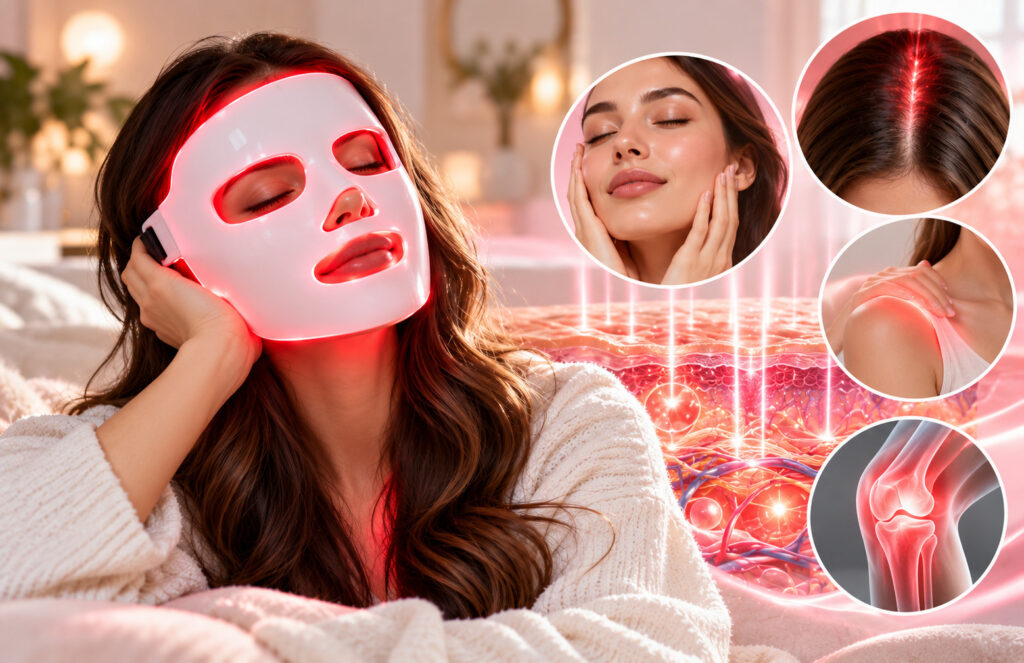
Red light reaches the upper layers of the skin. Near-infrared light travels deeper, which is why devices aimed at muscles and joints usually include it while a facial mask may use red light alone or a combination.
How it is thought to work
The leading explanation is that these wavelengths are absorbed by mitochondria, the parts of your cells that produce energy. That absorption appears to increase ATP production and cell signalling, which in skin translates to fibroblasts producing more collagen and elastin.
One detail that gets ignored in marketing: light therapy follows what researchers call a biphasic dose response. More is not better. Past a certain point, extra intensity or longer sessions reduce the benefit rather than increasing it. This is exactly why the session time in your device manual matters more than your enthusiasm.
What the research supports
For skin, studies on red and near-infrared LED treatment report improvements in collagen production, skin elasticity and the appearance of fine lines, generally measured over a four to twelve week period of regular sessions. A 2019 study published in the Journal of the American Academy of Dermatology found that low-level red and infrared light increased expression of collagen, elastin and hyaluronic acid in human skin.
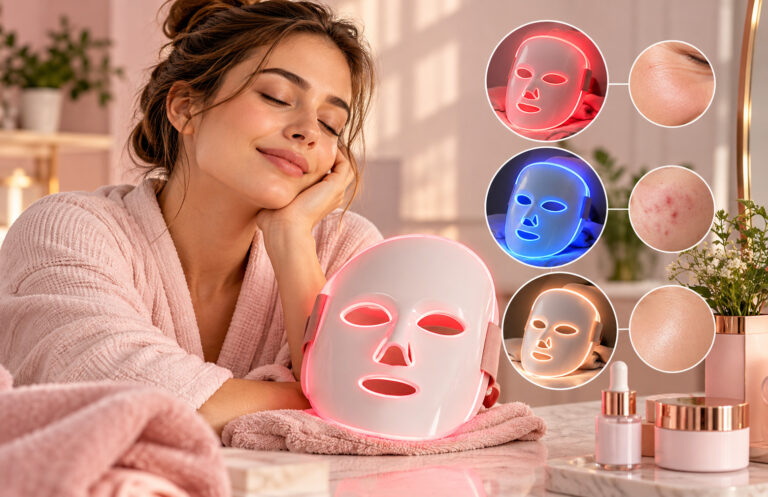
For acne, reviews of at-home LED devices report meaningful reductions in lesions, with red and blue light together performing better than red light alone. Red light calms inflammation while blue light targets acne-causing bacteria.
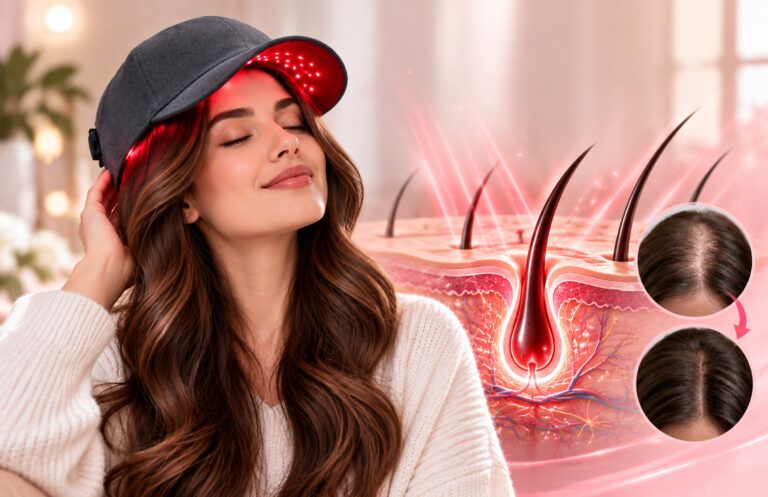
For hair, the evidence is arguably strongest of all. Pooled analysis of randomised trials found low-level laser therapy increased hair density compared with sham devices, which is why dermatology uses red light for hair growth more than for anything else. We cover that in detail in our guide to red light therapy for hair.
What it will not do
Red light therapy is not a replacement for medication, a dermatologist, or a healthy routine. It will not remove deep wrinkles, it will not reverse significant hair loss on its own, and it will not produce a visible change after one session. Researchers themselves note that no standardised protocol exists yet for the ideal session length or frequency, so anyone promising you an exact timeline is guessing.
Also worth knowing: these devices are FDA-cleared, not FDA-approved. Clearance means a device was shown to be substantially equivalent to an existing legally marketed device and meets safety standards. It is not the same as the clinical trial process a drug goes through.
How often should you use it?
Follow the manual that comes with your device, because session length and distance vary by product. As a general pattern, most studies run sessions several times a week rather than daily marathon sessions, over a period of weeks. Consistency over two to three months tells you far more than intensity in week one.
A practical tip: attach the session to something you already do. Ten minutes while your coffee brews, or during the last episode you watch at night. The people who see results are the ones who kept going in month three.
Safety and who should check first
The safety profile in published reviews is good, with mild temporary redness being the most commonly reported effect and no serious adverse events recorded. That said, a few sensible rules apply:
- Never look directly into the LEDs. Use the eye protection supplied with your device.
- Speak to a doctor first if you take medication that causes light sensitivity, such as isotretinoin, certain antibiotics and some antidepressants.
- Check with a professional if you are pregnant, have a skin condition being treated, or have an eye condition.
- Stop and ask for advice if you get persistent redness, irritation or headaches.
Choosing your first device
Match the device to the area you care about. A mask for facial skin, a cap for the scalp, a mat or panel for larger areas of the body, a handheld for targeted spots. Check that the manufacturer states the wavelengths, the session time and whether eye protection is included.
You can browse our full red light therapy range, or start with one of our bundles if you want a device and its matching skincare together. If you are unsure which suits you, send us a message and we will help you narrow it down.
Frequently asked questions
Does red light therapy hurt?
No. The light is not hot and does not damage the skin. Most people describe it as a warm glow, and many use the time to relax.
Can I use it with retinol or vitamin C?
Many people do, but apply active products after your session on clean, dry skin rather than before. If your skin is already irritated from a strong active, give it a break first.
How soon will I see results?
Studies on skin generally measure changes over four to twelve weeks of regular use. Hair studies typically run longer. Treat it as a routine, not a treatment.
This article is for general information and is not medical advice. Our products are not intended to diagnose, treat, cure or prevent any disease. Speak to a healthcare professional or dermatologist before starting a new therapy routine.