LED face masks went from a clinic novelty to a bathroom staple in a few years. The technology is real, but so is the marketing noise. Here is how to pick a mask that is worth the money, and how to use it so the sessions actually count.
What an LED mask does
An LED mask delivers low-intensity light at specific wavelengths to your facial skin. It does not heat, exfoliate or resurface anything. The aim is to trigger a cellular response, mainly increased energy production in skin cells, which over weeks can support collagen and elastin production and calm inflammation.
Because the effect is cumulative, a mask is a routine device rather than a treatment you do once before an event.
Red, blue, or both?
The colours are not decoration. They do different things.
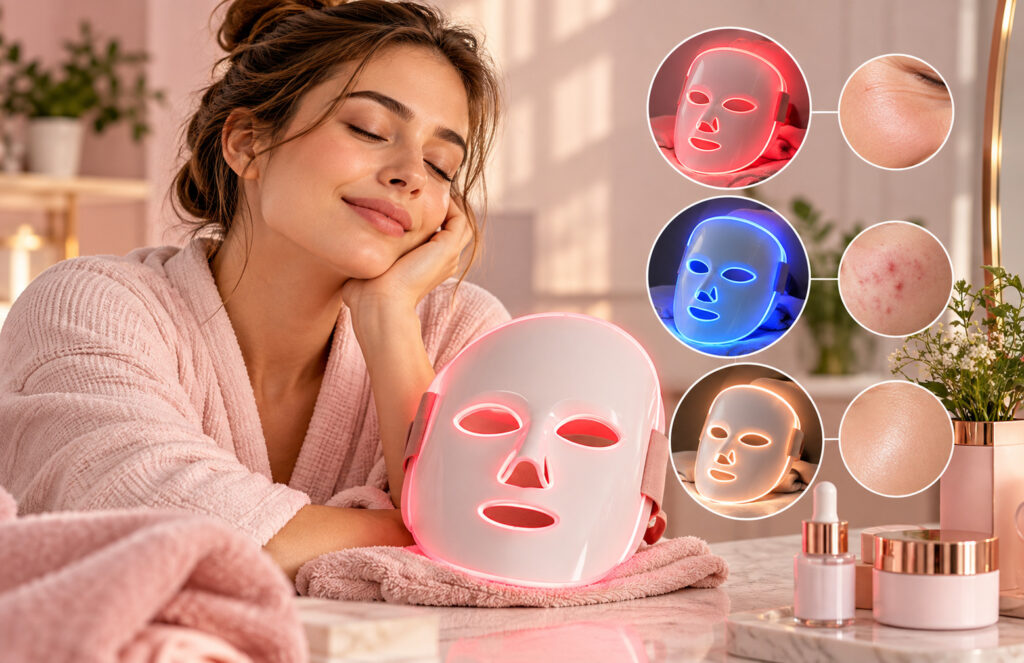
- Red light (around 630 to 660 nm) reaches the dermis and is the wavelength most associated with anti-ageing effects, collagen support and reduced redness.
- Near-infrared (around 810 to 850 nm) goes deeper and is often included for recovery and overall skin support. It is invisible, so a mask can be running even when it looks dim.
- Blue light (around 415 nm) targets the bacteria involved in acne. Reviews report that red and blue light together outperform red alone for inflammatory acne.
If your main concern is fine lines and dullness, a red and near-infrared mask makes sense. If it is breakouts, look for a mask that includes blue light too.
What to check before you buy
- Stated wavelengths. A brand that will not tell you the nanometres is asking you to trust a light bulb.
- Coverage. A rigid mask that sits away from the skin treats less area than a flexible mask that follows your face. Check that it covers the forehead and jaw, not just the cheeks.
- Session time. Most masks run a fixed programme, often around 10 minutes. Longer is not better, so a device that stops on its own is a plus.
- Eye protection. Built-in shields or supplied goggles. Never improvise this.
- Fit and weight. A mask you have to hold in place is a mask you will stop using.
How to use it properly
- Start with clean, dry, bare skin. Serums and creams sit between the light and your skin, and some ingredients make skin more light-sensitive.
- Put your eye protection on and position the mask so it sits close and even.
- Run the full session at the time stated in the manual. Do not double up thinking it will speed things along, since the dose response works against you.
- Apply your skincare afterwards. A hydrating serum and moisturiser on warm, clean skin is the easiest win. Browse our daily essentials range for options that pair well with a mask routine.
- Repeat several times a week and judge it after two to three months, not two weeks.
Mistakes that waste your sessions
- Using it over makeup or SPF. The light has to reach skin.
- Layering a strong retinoid right before a session on already irritated skin. Use actives afterwards, and give irritated skin a rest day.
- Stopping at week three. Research on skin measures change across four to twelve weeks. Quitting early means you paid for the device and skipped the result.
- Taking a photo only at the end. Take a before photo in the same light, same angle, no makeup. Memory is a terrible measuring tool.
- Expecting it to replace treatment for a diagnosed skin condition. If you are being treated for acne, rosacea or melasma, ask your dermatologist how a mask fits in.
Is it safe?
Published reviews of LED therapy report a good safety record, with mild, temporary redness as the most common effect. The precautions that matter are simple: protect your eyes, follow the stated session time, and check with a doctor first if you take photosensitising medication such as isotretinoin, some antibiotics or some antidepressants, or if you are pregnant.
Frequently asked questions
How often should I use an LED face mask?
Follow your device manual. A common pattern in studies is several sessions per week over a period of weeks, rather than daily long sessions.
Can I use an LED mask with acne medication?
Ask your doctor first, particularly with isotretinoin or any medication that increases light sensitivity.
Do cheap masks work?
Price alone tells you nothing. Stated wavelengths, coverage, fit and a fixed session timer tell you a lot. A cheap mask with clear specifications can beat an expensive one without them.
When will I see a difference?
Skin studies usually report measurable change over four to twelve weeks of regular use. Individual results vary, and nobody can promise a date.
Ready to start? See our LED masks and red light devices, or read our introduction to red light therapy at home first.
This article is for general information and is not medical advice. Our products are not intended to diagnose, treat, cure or prevent any disease. Speak to a healthcare professional or dermatologist before starting a new therapy routine.